
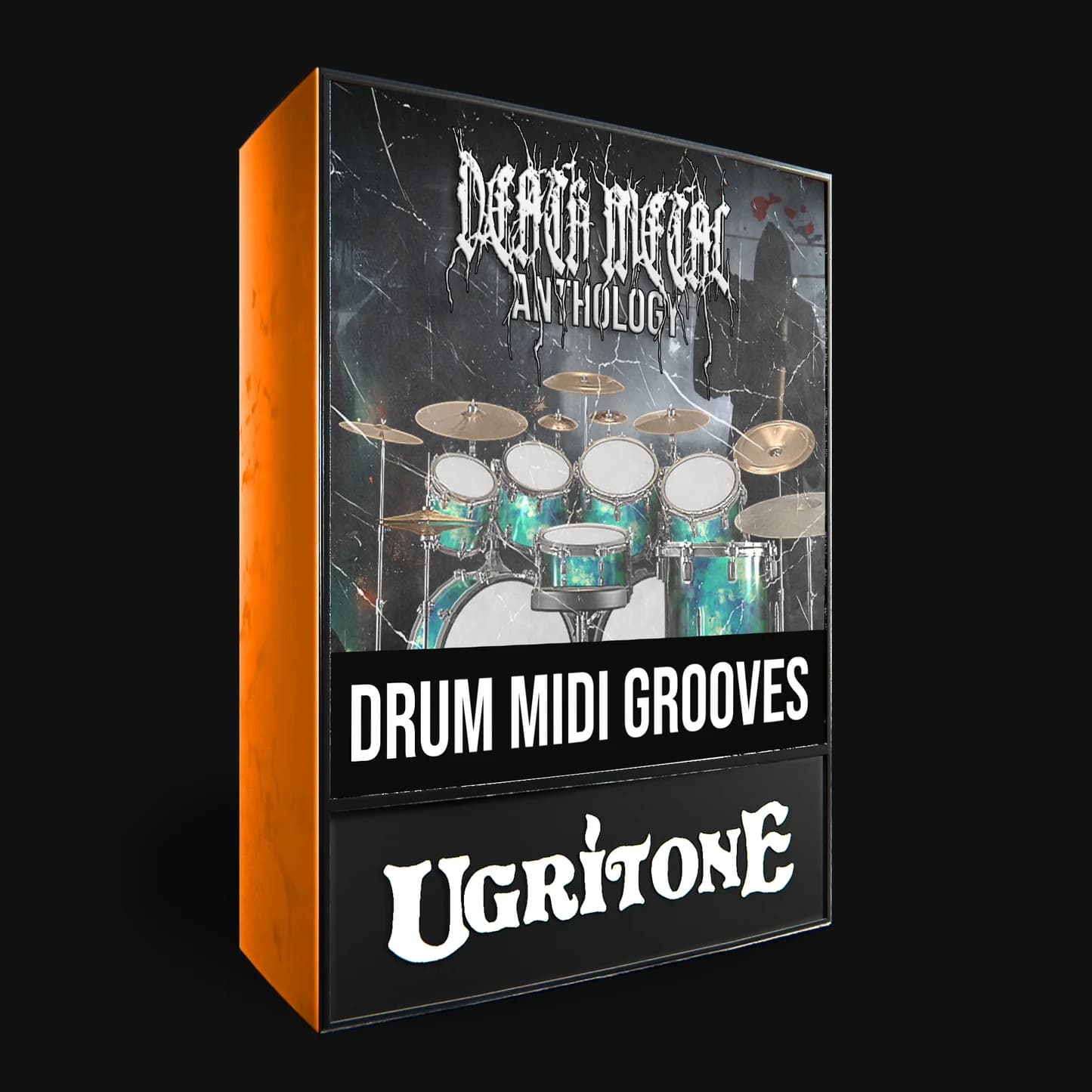

Death Metal Anthology
Ugritone$20.00
We're taking it even deeper into the crypts of metal history with the Death Metal Anthology update. This brutal expansion delivers a curated collection of grooves inspired by multiple eras and substyles — from the grimy roots of early day’s death metal to the blast-fueled precision of the late '90s underground.
Death Metal Anthology offers a plethora of beats ranging from various different Blast Beats, Skank beats into slower back beats and breakdowns.
Whether you're after cavernous doom-laced breakdowns or relentless speed assaults, this anthology is your new go-to for writing riffs that crush. Load it up and summon the full spectrum of death metal intensity.
What you get:
■ Over 200 different beats and fills
■ 21 different basic grooves
■ All drums played live
■ Beats range around 142 – 220bpm
■ Uses General Midi mapping
■ Easily navigable files
Groove List
Not sure how to kickstart your rhythm section? Groove List to the rescue!
We spent hours recording and crafting these grooves to give you the perfect rhythmic foundation for each genre and style. Browse through the Groove List and find the pattern that locks in perfectly with your track!
Grooves:
-
Triplet Db Back Beat
-
Triplet Trad Blast
-
Triplet Bomb Blast
-
Triplet Hammer Blast
-
¾ Triplet Back Beat
-
Slow Ride
-
Open Close Blast Beat
-
Db Slow Breakdown
-
Db Trad Blast
-
¾ Bomb Blast
-
Up Beat
-
¾ Traditional Blast
-
¾ Hammer Blast
-
Db Break down
-
Chaos Blast
-
Bomb Blast
-
Mexi Blast
-
Hammer Blast
-
Traditional Blast
-
Thrash Beat
-
Reverse Thrash
Specs:
Death Metal Anthology by Ugritone is Soundware (samples or presets that load into other products).
Format: MIDI
System requirements for using the MIDI files:
No special system requirements are needed. Our MIDI files are fully platform-independent and can be used on both 32-bit and 64-bit systems without any issues. Since MIDI files only contain performance data (like notes, velocity, and timing), they are compatible with virtually any DAW or MIDI-capable software, regardless of your operating system or hardware architecture. As long as your setup can load and play MIDI, you're good to go.
Please note: MIDI is not audio!
MIDI files do not contain actual audio or drum sounds. Instead, they store performance data such as which notes are played, when, and how hard. In order to hear sound, you'll need to load the MIDI files into a DAW (Digital Audio Workstation) or any MIDI-compatible software, and assign them to a virtual instrument (like a drum plugin or sampler). This allows you to trigger your own sounds using our professionally crafted grooves.
In other words: MIDI tells your instruments what to play, but not how it sounds. You bring the sound source – we bring the rhythm.